Computer Vision
YOLOv11 vs RT-DETR: Real Benchmark on Edge Devices
Exhaustive comparison of latency, mAP, and energy consumption on Jetson Orin, Raspberry Pi 5, and cloud hardware.
Perceptual intelligence architectures for enterprises that need more than automation: they need real understanding of the visual and semantic world.

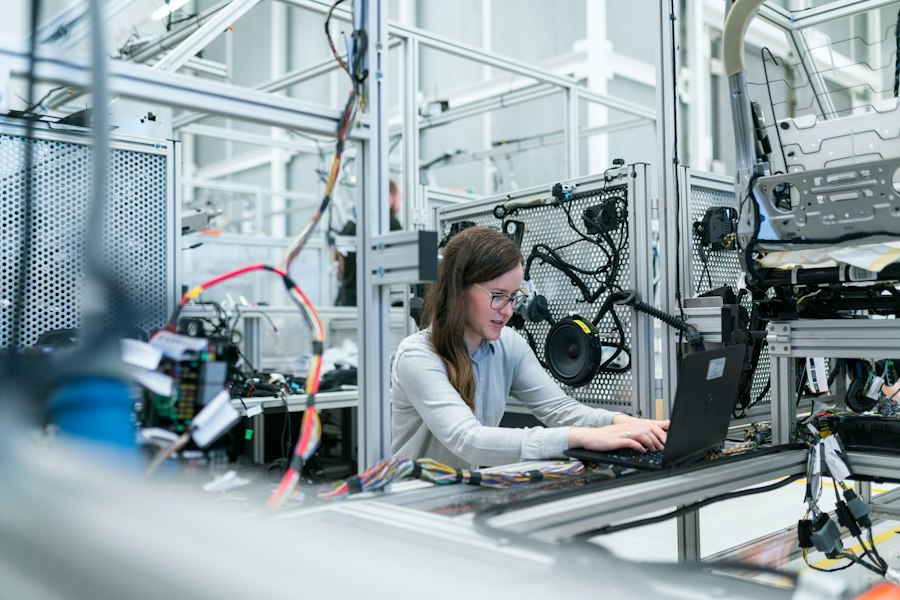
LAND NETWORKING S.L. is an engineering laboratory specialized in computer vision and agentic RAG systems. Our team combines applied research with production implementation, developing architectures that transform visual and semantic data into actionable intelligence.
We are not a generic AI consultancy. We are domain specialists who understand every layer of the stack: from sensor optics to agent decision-making.
From feasibility audit to production deployment. We build systems that work in the real world, not just in research notebooks.
Design and implementation of vision pipelines: detection, segmentation, classification, pose estimation, and 3D reconstruction. From camera to API.
Next-generation RAG systems with orchestrated agents: multi-step planning, episodic memory, adaptive retrieval, and long-context reasoning.
Search systems that understand text, images, video, and audio in a unified way. Multimodal embeddings, cross-modal re-ranking, and late fusion pipelines.
Infrastructure for production model deployment: inference optimization, quantization, distributed serving, drift monitoring, and CI/CD pipelines for ML.
Design and optimization of vector databases at scale: ANN indexing, metadata filtering, sharding, replication, and incremental update strategies.
Supervised and self-supervised training, efficient fine-tuning with LoRA/QLoRA, data synthesis for CV, domain-specific data augmentation, and adversarial evaluation.
We transform industrial infrastructures with accumulating data into systems that observe, understand, predict, and act. It's not about "adding AI to everything": it's about building the right four layers where AI makes real industrial sense.
The starting point is not a model. It's the operational model: defining what to optimize, with what KPIs, at what frequency, and at what error cost. Without that, you end up with dashboards with pretty curves — half the industry's favorite sport.
If you have sensors writing to InfluxDB, you already have half a SCADA set up. What's missing is structuring that into four clean layers where AI makes real industrial sense: reliable capture → operational context → analytics and rules → AI for decision and optimization. And on top, an HMI/SCADA that isn't a badly tuned Grafana iframe.
Signal standardization at the source. OPC UA for maximum machine-enterprise semantic interoperability. MQTT for lightweight edge telemetry. Gateways to translate Modbus, BACnet, CAN, PROFINET.
MQTT broker (Mosquitto/EMQX), collectors (Telegraf, Node-RED), and a normalizer that enforces canonical names, units, signal quality, consistent timestamps, and correct context tags. Poorly designed tags in InfluxDB are perpetual premium suffering.
InfluxDB 3 as time series historian. PostgreSQL for assets, work orders, shifts, recipes, alarms, energy cost, and plant taxonomy. Optionally Neo4j for asset graph and causality analysis between events.
Grafana for dashboards, multi-source alerting, and ad-hoc analysis. Dedicated SCADA HMI for operational synoptics of plant, line, and machine. Panels by energy, quality, maintenance, and alarms. This is where AI becomes visible: operator recommendations, early alerts, supervised actions.
We don't start with the AI model. We start with the operational model. Before training anything, we audit what exactly you want to optimize, with what variables and with what consequences of error.
If acquisition is poorly labeled, if timestamps are inconsistent, if there's no operational context (shift, recipe, machine state), the best AI model will produce garbage. AI is the last layer, not the first.
The final result isn't a notebook in production: it's an industrial operating system with actionable alerts, operator recommendations, and dashboards that a plant manager can use without ML training.
The ecosystem we master. We select tools for maturity, performance, and maintainability, not hype.
Dense technical documentation. No level-0 tutorials. Straight to what matters: architectures, trade-offs, real results.

A deep analysis of how to design agents that iterate over their own context retrieval, evaluate relevance, and autonomously reformulate queries for more precise answers.
Read Article →
Exhaustive comparison of latency, mAP, and energy consumption on Jetson Orin, Raspberry Pi 5, and cloud hardware.
How to integrate Segment Anything Model 2 into industrial pipelines, manage complex prompts, and optimize for real-time video.

Analysis of ColPali's architecture, its full-page embeddings, and how it outperforms classic pipelines on documents with tables and charts.
Vector DB selection guide with real benchmarks at 100M vectors: throughput, consistency, filtering, and operational cost.
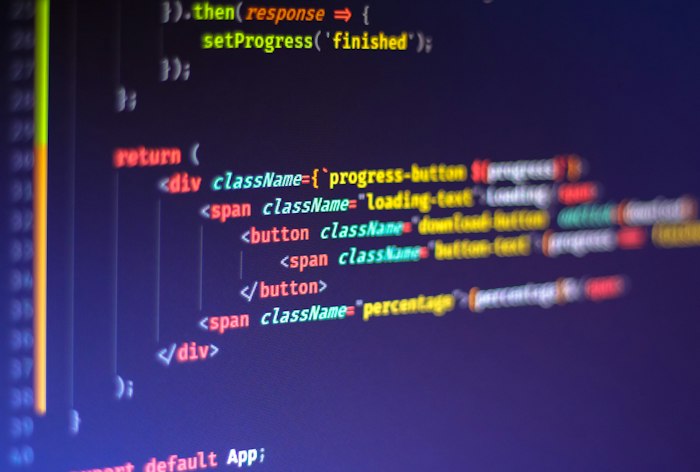
Practical guide to efficient fine-tuning with LoRA on ViT and LLaVA. Analysis of rank, alpha, and layer selection strategies for CV.

Complete workflow for export, INT8 quantization, and deployment with Triton Inference Server for combined vision and text models.
Relevant papers on CV, multimodal RAG, and agentic systems. Selected and commented by our team. No automation.
Systems deployed in production environments. Real architectures, not lab demos.



We analyze the business problem, available data, and technical constraints. We produce a feasibility report with candidate architectures, computational cost estimation, and agreed success metrics. No blind commitments.
Audit of existing data, labeling strategy design, baseline benchmarking with foundation models (zero-shot / few-shot) to establish the floor. If the baseline solves the problem, we say so. We don't inflate projects.
Final architecture design, systematic experimentation with full tracking (W&B), ablation studies, and domain-specific cross-validation. We deliver reproducible notebooks.
Inference optimization (TensorRT, ONNX, quantization), containerization, cloud or edge deployment, drift monitoring, and alerts. CI/CD for models included.
Comprehensive technical documentation, training sessions for the client's team, maintenance playbooks, and continued access to our Knowledge Base. The goal is client independence.

Telecommunications Engineer. 10 years in industrial perception systems.

LangChain and LlamaIndex contributor. Specialist in large-scale retrieval systems.

ML infrastructure engineer at Amazon Science for 5 years. Expert in distributed serving and inference optimization.

Postdoc at ETH Zurich in multimodal learning. Co-author of 14 papers in CVPR, ICCV and NeurIPS. Directs the Research Digest.
First free 45-minute technical session. No sales decks. We analyze your problem and tell you if we have something that adds real value.
No commitment · 24h response